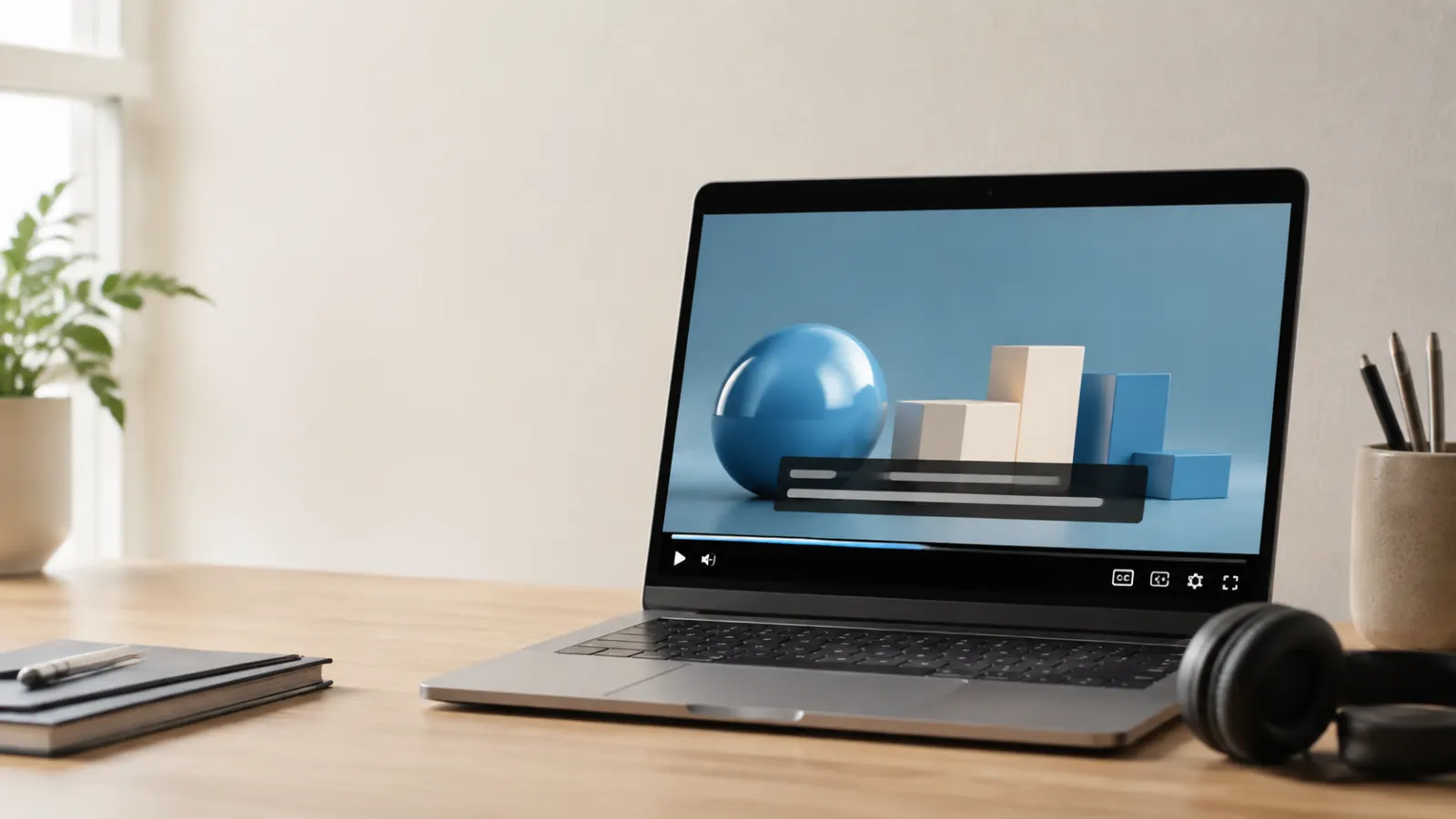
Free internet closed captioning helps viewers understand online videos without relying entirely on sound. It can display spoken dialogue, identify speakers, and describe meaningful audio such as music, laughter, alarms, or a door closing.
This guide explains how online closed captions work, where to find free captioning features, and how creators can produce accurate captions without paying for professional software.
Quick Answer: What Is Free Internet Closed Captioning?
Free internet closed captioning refers to tools and platform features that display a synchronized text version of an online video’s audio at no cost to the viewer or creator.
Closed captions usually include:
- Spoken dialogue
- Speaker identification
- Relevant sound effects
- Meaningful music cues
- Other audio information needed to understand the video
The word “closed” means the viewer can normally turn the captions on or off. Open captions work differently because they remain permanently visible as part of the video image.
The World Wide Web Consortium explains that captions provide speech and important non-speech audio information for people who are Deaf or hard of hearing. They also need to appear at the correct time during the video. W3C Web Accessibility Initiative
Is “A Free Internet Closed Captioning” the Correct Phrase?
“A free internet closed captioning” is not a natural standard phrase in English. Clearer alternatives include:
- Free internet closed captioning
- Free online closed captioning
- Free closed captioning for online videos
- Free automatic captioning
- Free live captions for internet audio
- Free video caption generator
- Online closed captioning tools
Someone using the original phrase probably wants one of two things:
- A free way to display captions while watching online media.
- A free tool for adding captions to a video.
The right solution depends on whether you are watching a video or publishing one.
How Closed Captions Work on the Internet
Online closed captions usually exist as a separate timed text track. The video player displays each caption at a specified point while the video plays.
A creator may:
- Type captions manually
- Upload a caption file
- Generate captions with speech recognition
- Edit captions inside a video platform
- Send real-time captions to a live stream
Common caption file formats include WebVTT and SubRip, commonly identified by the VTT and SRT file extensions. Platform support varies, so creators should check the requirements of the website where they plan to publish.
Because closed captions remain separate from the video image, viewers may be able to turn them on or off, select a language, and adjust their appearance. For example, YouTube allows viewers to change caption font, size, color, opacity, background, and character edge style.
Free Ways to Get Captions While Watching Online Content
You may not need to download a separate captioning program. Start with the controls already available in the video player, browser, or operating system.
Turn On the Video Player’s CC Option
Look for one of these controls:
- CC
- Captions
- Subtitles
- Accessibility
- Speech bubble icon
- Settings menu
Select the language or caption track you want. If no caption option appears, the creator may not have provided a track and the platform may not support automatic captions for that video.
On YouTube, viewers can open the caption menu and choose an available language. Some videos also offer automatic translation, although availability depends on the video and its caption tracks.
Use Chrome Live Caption
Google Chrome includes a Live Caption feature that can generate captions for supported audio played in the browser. Google states that the feature can caption media such as videos, podcasts, games, live streams, and video calls. Its availability and translation options can depend on the device, language, and browser configuration. Google Chrome Help
To look for the feature on a computer:
- Open Chrome.
- Select the three-dot menu.
- Open Settings.
- Select Accessibility.
- Find Live Caption.
- Turn the feature on.
- Play media with speech and check for the caption box.
Menu labels can change after browser updates. If you cannot find the feature, update Chrome and consult Google’s current instructions for your device.
Check Your Device Accessibility Settings
Many phones, tablets, computers, and smart televisions include accessibility controls for captions. Search the settings for terms such as:
- Closed captions
- Live captions
- Subtitles
- Caption preferences
- Hearing accessibility
Apple devices, Android devices, Windows computers, browsers, and television platforms do not all use the same menus. Caption availability also depends on the app and media source.
Use a Transcript When Captions Are Unavailable
A transcript gives you a written version of the audio, but it does not always follow the video in real time. It remains a useful alternative for reviewing information, searching for a specific statement, or reading at your own pace.
A transcript does not automatically replace synchronized captions for a video. The W3C treats captions and text alternatives as related but distinct accessibility solutions for time-based media.
Free Ways to Add Closed Captions to Your Own Video
Creators have several no-cost starting points. Choose a method based on where the video will appear and whether viewers need switchable captions.
Generate and Edit Captions in YouTube Studio
YouTube can create automatic captions for supported languages through automatic speech recognition. Google warns creators to review these captions because speech recognition may misrepresent accents, dialects, background noise, or unclear audio. YouTube Help
A typical workflow is:
- Sign in to YouTube Studio.
- Select Subtitles from the left menu.
- Choose the video.
- Review the automatic caption track, if available.
- Duplicate and edit the track.
- Correct the words, punctuation, speakers, and timing.
- Publish the reviewed captions.
YouTube also lets creators add a language and upload or type captions.
Automatic captions offer a useful draft. They should not be treated as finished accessibility content without human review.
Create Automatic Captions in Microsoft Clipchamp
Microsoft Clipchamp offers automatic caption generation inside its video editor. Microsoft’s instructions say creators can import media, place it on the timeline, open the captions panel, choose the spoken language, and generate an editable transcript with timestamps.
Clipchamp also allows creators to:
- Correct misspelled words
- Review the generated transcript
- Change caption formatting
- Hide or remove generated captions
- Export the edited video
Check the current account, platform, and export terms before starting a large project because product plans and feature limits can change.
Write a Caption File Manually
Manual captioning takes longer, but it gives the creator direct control over wording and timing.
A basic process looks like this:
- Transcribe the spoken dialogue.
- Divide the text into readable caption segments.
- Add start and end times.
- Identify speakers when the identity is unclear.
- Describe meaningful sounds.
- Save the file in a supported format.
- Upload it with the video.
- watch the complete video to verify synchronization.
Manual editing works well for short videos, scripted presentations, and clips where automatic transcription struggles with names or technical language.
Edit an Automatically Generated Draft
A practical free workflow combines automation with human review:
- Generate a draft with a supported platform.
- Play the video from the beginning.
- Correct every transcription error.
- Add missing punctuation.
- identify speakers where needed.
- Include meaningful sound information.
- Fix captions that appear too early or too late.
- Test the finished track on desktop and mobile.
This approach reduces manual typing while preserving the quality control required for useful captions.
Closed Captions, Open Captions, Subtitles, and Transcripts
These terms describe related features, but they are not identical.
Closed Captions
Closed captions can usually be switched on or off. They represent dialogue and meaningful non-speech audio.
Best for:
- Educational videos
- Tutorials
- Webinars
- Interviews
- Streaming media
- Videos with multiple language tracks
- Content requiring viewer control
Open Captions
Open captions are permanently embedded in the image. Viewers cannot disable them through the video player.
Best for:
- Short social media videos
- Public displays
- Videos likely to play without sound
- Platforms that may remove separate caption tracks
The main limitation is that creators must edit and export the video again to correct embedded caption errors.
Subtitles
Subtitles commonly present dialogue for viewers who can hear the audio but do not understand its language. Captions focus on access to the complete meaningful audio experience, including speaker information and relevant sounds.
Usage varies between countries and platforms. Some services use “subtitles” as a broad label that includes accessibility captions.
Transcripts
Transcripts present the audio in a separate text document or page. They help users search, quote, scan, and review the material.
Unlike captions, transcripts do not necessarily appear in synchronization with the video.
Why Internet Captions Matter for Accessibility
Captions give people who are Deaf or hard of hearing access to information delivered through audio. They can also help viewers understand speech in a noisy location, watch without disturbing others, follow an unfamiliar accent, or reinforce comprehension through reading.
W3C’s Web Content Accessibility Guidelines require captions for prerecorded synchronized media at Level A, subject to a limited exception when the media itself is clearly identified as an alternative to text.
For live synchronized media, captions form part of WCAG Level AA. W3C explains that live captions should communicate dialogue, speaker identity, meaningful sound effects, and other significant audio information in real time.
Meeting a technical requirement should not be the only objective. Captions need to remain accurate, understandable, complete, readable, and synchronized if they are going to help real viewers.
What Good Closed Captions Should Include
High-quality captions represent the information a viewer would otherwise receive by listening.
Include:
- Accurate spoken dialogue
- Correct names and specialist terms
- Speaker identification when needed
- Meaningful sound effects
- Relevant musical information
- Appropriate punctuation
- Clear timing
- Important off-screen speech
Avoid:
- Leaving out essential dialogue
- Guessing at unclear words
- Displaying captions too early
- Allowing captions to remain after speech ends
- Covering important visual information
- Splitting phrases in confusing places
- Adding decorative sound descriptions that do not affect meaning
- Publishing an automatic transcript without checking it
How to Make Captions Easier to Read
Keep Each Caption Focused
Break long speech into manageable segments. A viewer should have enough time to read the text while still watching the action.
Follow Natural Speech
Divide captions at logical pauses or phrase boundaries. Avoid separating an adjective from its noun or a person’s name across unrelated caption frames.
Identify Speakers Clearly
Add the speaker’s name when viewers cannot tell who is talking. Use consistent wording throughout the video.
Describe Sounds That Affect Meaning
Mention a sound when it changes the viewer’s understanding of the scene.
Useful examples include:
- A warning alarm sounds.
- The audience laughs.
- Quiet piano music begins.
- Someone knocks at the door.
- The phone vibrates on the table.
- Thunder interrupts the conversation.
There is no need to describe every minor background noise.
Use Strong Contrast
Caption text must remain visible against light and dark scenes. A solid or partly opaque background often improves readability.
Check Placement
Do not let captions cover names, instructions, faces, demonstrations, or other essential visual details. Move or style the caption area when the platform permits it.
How to Choose the Right Free Captioning Method
Ask these questions before selecting a tool:
Are You Watching or Creating?
Use a browser or device caption feature when you only need help understanding media. Use an editor or platform caption track when you own the video and want to improve access for everyone.
Does the Platform Support Separate Caption Tracks?
Choose closed captions when the platform accepts them and viewer control matters. Choose open captions when captions must remain visible everywhere.
Is the Video Prerecorded or Live?
Prerecorded content gives you time to generate, edit, and test captions. Live video requires a real-time captioning system, and quality may vary more because corrections cannot always happen before viewers see the text.
Does the Audio Contain Technical Language?
Manual review becomes especially important when a video contains:
- Product names
- Medical terms
- Legal language
- Acronyms
- Uncommon names
- Multiple speakers
- Strong background noise
- Several languages
Do You Need Several Languages?
A platform with separate caption tracks usually offers more flexibility than captions permanently placed inside the image. Confirm supported languages and file formats before creating each track.
Common Free Captioning Mistakes
Assuming Automatic Means Accurate
Speech recognition can save time, but it can misunderstand names, accents, overlapping speakers, or poor audio. Review the entire result.
Confusing Captions With a Word-for-Word Transcript
Captions must match the timing of the video. A transcript can be valuable, but it does not automatically provide synchronized access.
Forgetting Non-Speech Information
Dialogue alone may not explain why a character reacts, when an alarm starts, or what off-screen event occurs.
Using Captions That Are Too Fast
Large blocks of text can disappear before viewers finish reading. Adjust the segmentation and timing instead of placing an entire paragraph on the screen.
Adding Permanent Captions Without Keeping a Clean Copy
Keep the original video without embedded text. You may need it later for corrected captions, another language, or a platform that supports closed tracks.
Trusting the Preview Alone
Test captions after publishing. Check the CC control, language label, synchronization, mobile appearance, and any point where text overlaps important visuals.
Final Thoughts
Free internet closed captioning can make online video easier to understand without requiring expensive software. Viewers can start with the video player, browser, or device accessibility settings. Creators can generate a draft through a supported platform, but they should always review the wording, timing, speaker labels, and meaningful sounds.
The best captions do more than display words. They give viewers an accurate and timely representation of the audio, making online content more useful and accessible.
Frequently Asked Questions
Is internet closed captioning free?
Many websites, browsers, devices, and video editors provide caption features at no additional charge. However, availability, usage limits, export options, supported languages, and account requirements vary. Verify the current terms of the tool you plan to use.
What does CC mean on an online video?
CC usually means closed captions. The control lets viewers display or hide an available caption track.
Can I get captions for any website?
Not always. A site may provide its own caption track, while a supported browser may generate live captions for some media. Protected content, unsupported audio, browser limitations, languages, or device settings may affect availability.
Are automatic captions reliable?
They can provide a useful starting point, but reliability depends on audio quality, language, pronunciation, background noise, and speaker overlap. YouTube specifically advises creators to review and edit automatic captions.
Are subtitles the same as closed captions?
Not exactly. Subtitles often communicate dialogue in another language, while accessibility captions also represent meaningful sounds and speaker information. Some platforms use the terms interchangeably.
Can closed captions be turned off?
Yes, that is normally what makes them “closed.” Open captions remain permanently visible.
Do captions need to describe every sound?
No. Include sounds that contribute to meaning, context, mood, or action. Minor noises that add nothing to the viewer’s understanding can usually be omitted.
Is a transcript enough for video accessibility?
A transcript is helpful, but it does not provide synchronized text while the action unfolds. Prerecorded synchronized media generally needs captions under WCAG 1.2.2, subject to the exception stated in the criterion.
Which free method is easiest for beginners?
a-For YouTube videos, start with YouTube Studio and carefully edit the automatically generated track.
b-For a video editing project, Clipchamp provides an editable automatic caption workflow.
c-For watching web media, try the video player’s CC control or Chrome Live Caption.